
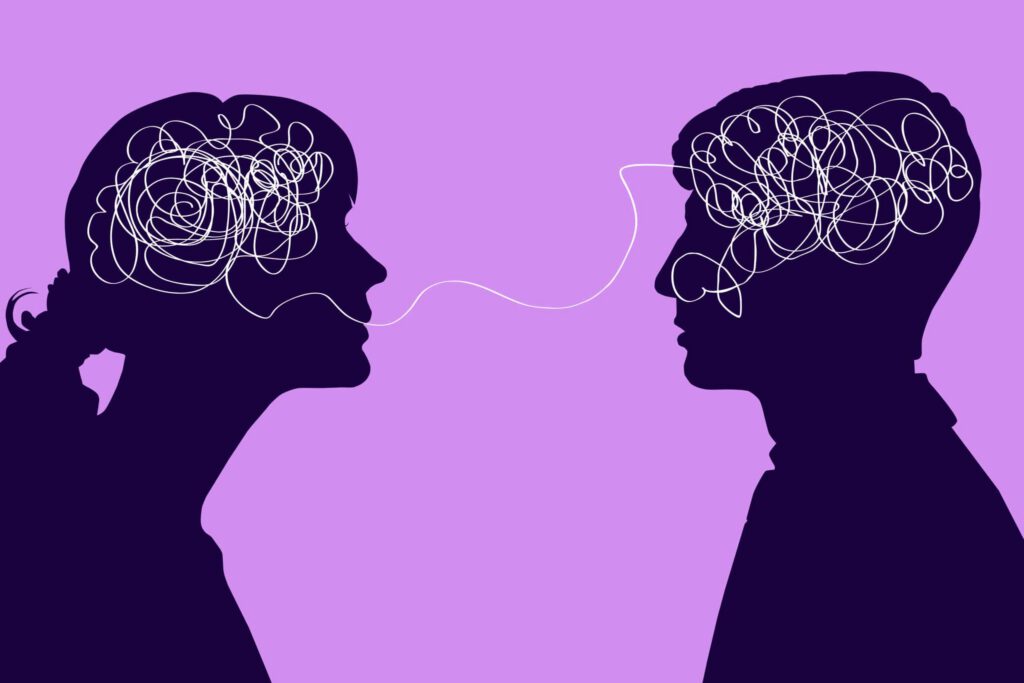
Develop Human to Human Conversation Intelligence to Improve Customer Experience

Jerry Briggs, who acquired ApexCX in May, 2023, brings three decades of experience in large enterprise operations and growth.
View full bio →Improving human-to-human conversation intelligence between contact center agents and customers will improve customer experience, as well as the AI model thereof. AI-based conversation intelligence is only part of the solution since the interpersonal skills of contact center agents is the best way to improve CX.
The need for human-to-human conversation intelligence
If you put the term “conversation intelligence” into a search engine, you will find entry after entry listing AI software for sale, to monitor and analyze customer and call center conversations. The AI software “eavesdrops” in the background, gathering data to suggest responses and collect analytics. Since AI depends on human’s conversational data, improving human conversation intelligence will elevate the quality of data that shapes AI models.
Developing better human-to-human conversation intelligence will drive better customer experience from the very start. And that will provide a stronger basis for training the AI’s large language models, driving a virtuous circle of improvement.
The process needs to start with humans. This article will look at ways of improving human-to human interactions.
Steps to improve conversation intelligence
Humans are born to communicate; they thrive on interaction. Despite these inborn tendencies, barriers to communication are common. The speaker and listener may have different goals or needs. Fears and other emotions may block communication.
When employees feel valued and trusted, they are more likely to be collaborative, and to communicate without fear of being judged. Fear and anxiety are the first and biggest obstacles to communication, according to Judith Glaser, author of Conversational Intelligence. When organizations cultivate a working environment based on trust, the quality of communication will improve.
Listening and empathy are keys to communication. The goal is to listen without prejudging the listener, while acknowledging the speaker’s feelings and concerns.
Use Active Listening. An excellent way to improve human-to-human conversation intelligence is to practice the principles of active listening. The technique has the simple goal of listening to the speaker’s whole message, making the speaker feel heard, and only offering responses afterward. The basics of active listening include:
- Limiting distractions: The listener should be able to focus attention on the conversation with as few distractions as possible. These include external distractions, such as noise or computer screens, and internal distractions, such as being preoccupied by other thoughts.
- Listening to the entire message: The listener should avoid the temptation to immediately offer thoughts and suggestions. Having the patience to hear the entire message shows respect and promotes understanding.
- Withholding judgment: The listener should avoid passing judgment on the speaker or the message. While the listener need not agree with every statement, he or she should avoid filtering statements through their own assumptions and biases.
- Paying attention to tone and emotion: The words used in a message only convey part of the meaning. In a contact center setting, it’s important for the listener to pay attention to the cues provided by tone of voice, emotion, and what is implied or unsaid.
- Asking questions: In addition to gathering information, asking questions keeps the listener focused and shows interest.
- Reflecting by paraphrasing: Repeating or paraphrasing the speaker’s words is an essential way to show interest, understanding, and empathy.
Active listening requires full attention and the development of human-to-human connection. By practicing these techniques, agents can develop greater conversation intelligence and provide more satisfying solutions, which improves customer experience and customer satisfaction.
Build Emotional Intelligence. Another foundation for developing human-to-human connection is emotional intelligence or “EQ.” Developing EQ helps us to regulate our own emotions, empathize with others, and manage conflict, among other benefits. Some skills associated with emotional intelligence are:
- Becoming Self-Aware: Self-awareness starts with recognizing our own emotional states. Greater self-knowledge is the first step towards empathy and connection with others.
- Regulating Emotional Responses: Emotional regulation is the process of moving from primitive, “fight-or-flight” responses to more mutually beneficial ones for both the listener and the speaker. Regulating emotions requires slowing down to let higher brain functions catch up with raw emotions.
- Developing Empathy: Empathy is a way of understanding another person, their needs and emotional state. Empathy doesn’t mean we agree with or condone everything, just that we understand.
- Building Social Skills: Social skills are emotional intelligence in action, the result and goal of the previous steps. In the case of contact center agents, the most important skills include effective communication, teamwork, and conflict resolution.
Developing EQ will come easily to some, and with more difficulty to others. Mindfulness exercises, role-playing, other practical training, and online courses can help. Cultivating a work environment that promotes trust and open communication, as said earlier, is another important way to develop EQ.
Conversation intelligence begins with human to human interaction. Providing contact center employees with the skills to listen, empathize, and respond to customer queries will improve customer experience, as well as feed AI modeling with higher quality data for conversation intelligence. AI models and prompts should follow the human example, not lead.
©Jerry Briggs all rights reserved.
If you would like to learn more about conversation intelligence and improving customer experience in the age of AI, please contact us. We at ApexCX are leading customer experience support services with both technology and humanity, with the end goal of letting customers experience humanity.